
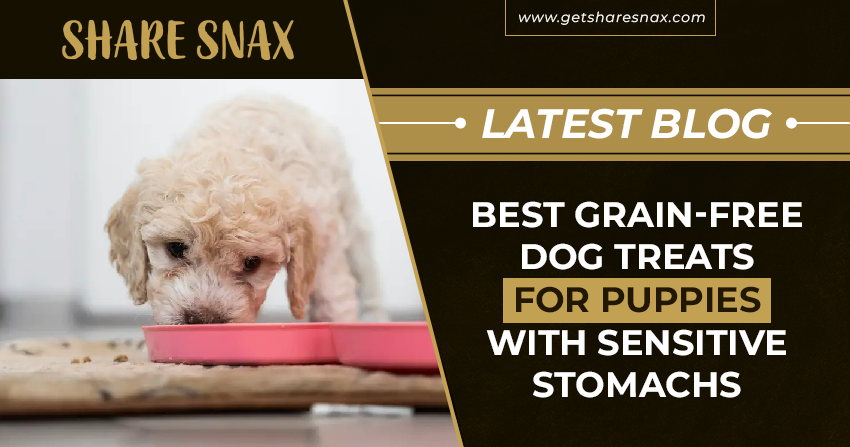
If your puppy has been dealing with tummy troubles, loose stools, gassy episodes, or that look they give you right before they do something unfortunate on your rug, you’re probably already deep in the research rabbit hole. And somewhere along the way, you’ve likely come across the term “grain-free.”
But what does it actually mean? Is it just a marketing trend, or is there real substance behind it? And more importantly, is a puppy’s grain-free dog treat the right move for your specific pup?
Let’s slow down and actually talk through it to help you make the best call for your furry family member.
Before we even get into grain-free treats, it helps to understand why some puppies struggle digestively in the first place.
Puppies are born with immature digestive systems. In the first several months of life, their gut is still developing the enzymes and bacteria it needs to properly break down food. This is completely normal, but it also means they’re more vulnerable to ingredient sensitivities, sudden food changes, and anything that doesn’t agree with their system.
Some common reasons puppies develop sensitive stomachs include:
That last one is where grain-free treats come into the conversation.
Grain-free simply means the product doesn’t contain grains, no wheat, corn, barley, oats, rice, or rye. Instead, the recipe uses alternative carbohydrate sources like sweet potato, chickpeas, lentils, peas, or tapioca.
For puppies with a genuine grain sensitivity or intolerance, removing grains from their diet can make a noticeable difference. Think less bloating, more consistent stools, less scratching, and an overall happier pup.
But here’s an important nuance: not every puppy needs to be grain-free. Some do really well with whole grains like brown rice or oats. The key is paying attention to your individual dog and working with your vet to figure out what’s actually causing the digestive issues before assuming grains are the problem.
That said, if your vet has suggested trying a grain-free approach, or if you’ve already noticed that grain-heavy treats seem to cause issues for your pup, then finding the right grain-free treat is absolutely worth the effort.
Not all grain-free treats are worth your money. Some brands slap “grain-free” on the label and replace grains with just as many questionable fillers. Here’s what actually matters:
The shorter and more readable the ingredient list, the better. If you’re scanning a label and it reads like a chemistry textbook, put it back. Look for real whole foods, things like chicken, salmon, sweet potato, blueberries, pumpkin, or coconut.
Soft Texture
Puppies, especially younger ones, don’t always have the jaw strength or the teeth for hard, crunchy treats. Soft or semi-soft treats are generally more appropriate and also easier on a sensitive stomach because they’re simpler to digest.
Artificial preservatives, colors, and flavors have no business being in a treat for a puppy with a sensitive stomach. These additives are often the hidden culprits behind recurring digestive issues and skin problems.
This is a standard that means the ingredients used are the same quality as food made for human consumption. It’s a higher bar, and it matters, especially for pups whose systems are still developing.
If your puppy has a known protein sensitivity, look for treats with a single protein source. This makes it much easier to identify what’s working and what isn’t.
Tiny puppies need tiny treats. Oversized treats can be a choking hazard but also tend to be given in larger quantities than intended, which can overload a sensitive digestive system.
If you’re shopping for a grain-free treat and want to know which ingredients to look for (not just avoid), here’s a solid shortlist:
Pumpkin: An absolute superstar for digestive health. It’s high in fiber and naturally soothing for upset stomachs.
Sweet Potato: A gentle, easily digestible carbohydrate that works well as a grain substitute. Rich in vitamins and minerals, too.
Salmon or Salmon Oil: A great source of omega-3 fatty acids that support gut health and reduce inflammation.
Blueberries: Packed with antioxidants, easy to digest, and most puppies absolutely love them.
Coconut: Has natural antimicrobial properties and is generally well-tolerated by sensitive pups.
Chicken or Turkey: Lean, digestible proteins that tend to be gentle on developing digestive systems.
These are the kinds of ingredients you want to see near the top of the ingredient list, not buried beneath a long line of fillers and additives.
Let’s talk about the red flags. These are ingredients that have no place in a treat you’re giving a puppy with a sensitive stomach:
If you see any of these in a “grain-free” treat, it doesn’t matter that the grains are gone. The treat still isn’t a good choice.
At Share Snax, we built our snacks around a pretty different idea than most pet treat brands. We wanted to create something that both you and your dog could genuinely enjoy together. Not a human snack on one side and a mystery treat on the other.
That means we hold our ingredients to a human-grade standard. Every ingredient that goes into our snacks is something we’d be comfortable eating ourselves, which naturally rules out a lot of the junk that shows up in conventional dog treats.
For puppy parents dealing with sensitive stomach issues, this matters a lot. When you know exactly what’s in a snack, because you’d recognize every single ingredient, there’s a lot less guessing involved when something does or doesn’t agree with your pup.
We’re not about overwhelming you with a long list of health claims. We’re about making snack time something both of you can enjoy without worry. If you want to see what we’re currently offering, take a look at our shop and explore what might work for your puppy.
Even with the cleanest, most carefully formulated grain-free treat, the how of introduction matters just as much as the what.
Start small. Give your puppy just a tiny piece the first time, even a quarter of a treat. Watch how they respond over the next 24 hours before giving more.
One new thing at a time. Don’t switch their food and introduce new treats at the same time. If something causes a reaction, you won’t know which change to blame.
Keep a simple log. It sounds a bit extra, but jotting down what your puppy ate and how they felt afterward can help you spot patterns quickly.
Don’t treat overload. Even grain-free, even clean ingredients, treats should make up no more than 10% of your puppy’s daily caloric intake. Too much of anything can upset a sensitive stomach.
Give their system time. If you’ve switched to grain-free treats, give it at least two to three weeks before deciding whether it’s making a difference. Digestive systems don’t reset overnight.
If your puppy’s sensitive stomach issues are persistent, we’re talking ongoing diarrhea, vomiting, significant weight loss, or blood in the stool, please don’t rely on a treat switch to fix it. Those are signs that warrant a proper vet visit.
Grain-free treats can be a helpful part of managing mild sensitivities, but they’re not a substitute for medical care when something more serious is going on. A good vet can also help you do an elimination diet properly, which is the most reliable way to identify a true food sensitivity.
A sensitive stomach doesn’t have to mean your puppy misses out on treat time. It just means being a little more intentional about what you’re giving them.
Look for puppies grain free dog treats with clean, whole-food ingredients, things like pumpkin, sweet potato, salmon, and blueberries. Avoid the artificial stuff, introduce new treats slowly, and pay attention to how your specific pup responds.
And when you’re looking for snacks that you can feel genuinely good about, for your dog and for yourself, we’d love for you to check out what we’re doing at ShareSnax. Because snack time should be something you both look forward to.
Have questions about which snack might be a good fit for your puppy’s needs? We’re always happy to chat. Get in touch with us here , and we’ll help you figure it out.
Celebrate the bond between humans and dogs.
Join our community of dog lovers and be among the first to try the world’s first snack made for you, safe to share with your dog.
Share Snax. Operated by Concat Ecom, LLC
